


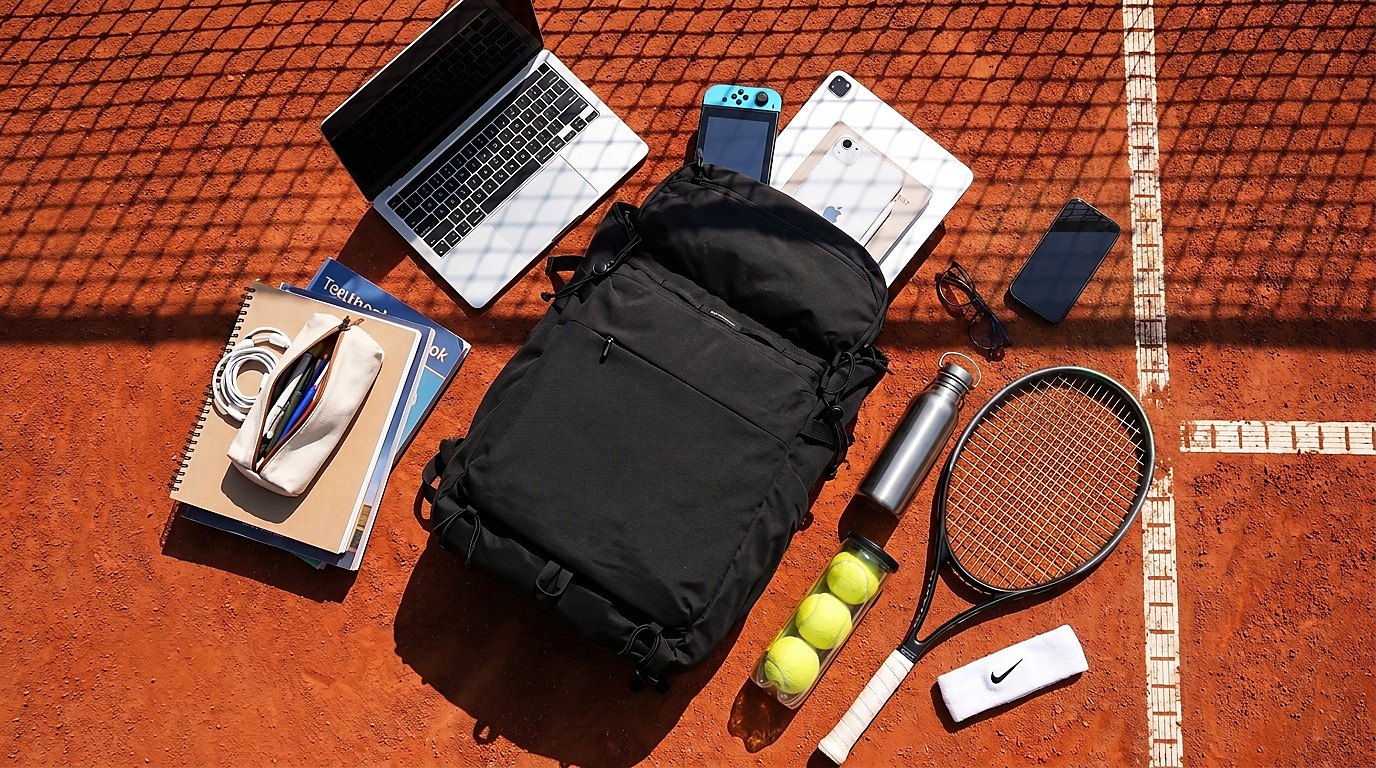
Choosing a backpack size can be surprisingly difficult. A backpack that looks spacious in a store may feel too large once you start carrying it every day, while a smaller one can quickly become cramped when you add a laptop, charger, water bottle, or extra clothing.
Backpack capacity is usually measured in liters, but the number alone does not tell you whether a backpack will work for your routine. A 20L backpack may be ideal for everyday commuting, while a 30L or 40L backpack may be more practical for travel.
The right size depends on what you carry, how long you are away from home, and how you use your backpack. This guide explains common backpack capacities and how to choose the right size for work, school, commuting, and travel.
What Does Backpack Capacity Mean?
Backpack capacity refers to the approximate amount of space available inside a backpack, usually measured in liters (L).
For example, a 20L backpack has less overall storage space than a 30L backpack. However, two backpacks with the same listed capacity can still feel very different because their compartments, shapes, and organization systems may vary.
A backpack with several dedicated compartments can sometimes feel more practical than a larger bag with one open compartment.
Capacity should therefore be treated as a starting point rather than the only factor when choosing a backpack.
What Backpack Size Is Best for Everyday Use?
For everyday activities, a backpack between 15L and 30L can cover a wide range of needs.
The best choice depends on how much you normally carry.
15–20L: Light Everyday Carry
A 15–20L backpack can work well if you carry a relatively small number of essentials.
Typical items might include:
-
Tablet or compact laptop
-
Notebook
-
Charger
-
Phone and wallet
-
Headphones
-
Water bottle
-
Small personal items
This size can be a good option for light commuters, students with fewer books, or anyone who prefers a compact backpack.
The main advantage is portability. A smaller backpack is less likely to encourage you to carry items you do not actually need.
20–30L: Work, School, and Daily Commuting
A 20–30L backpack provides more flexibility without necessarily becoming too bulky.
It can accommodate a combination of:
-
Laptop
-
Books or notebooks
-
Charger and cables
-
Headphones
-
Water bottle
-
Lunch
-
Light jacket
-
Personal items
For many people, this range offers a practical middle ground between a compact everyday bag and a larger travel backpack.
It can also work well when your daily load changes. You may carry only a laptop and charger on one day, then add books, clothing, or other items on another.
What Backpack Size Is Best for Work or College?
The ideal capacity for work or college depends on your daily schedule.
If you mainly carry a laptop, notebook, charger, and a few personal items, a smaller backpack may be enough.
If you also carry books, lunch, clothing, or sports equipment, you may need additional space.
For a Laptop and Light Essentials
A 15–20L backpack may be sufficient for a light work or college setup.
The focus should be on organization rather than simply capacity. A dedicated laptop compartment and smaller accessory pockets can make a compact backpack surprisingly practical.
For Laptop, Books, and Everyday Essentials
A 20–30L backpack offers more flexibility for a typical work or university day.
This range can be particularly useful if you commute by train, bus, bicycle, or on foot and want to carry everything you need in one bag.
For Work Plus Extra Gear
If your routine includes gym clothes, camera equipment, larger accessories, or other bulky items, a backpack closer to 30L or more may be more suitable.
However, carrying more capacity also means carrying more potential weight. Choose the size based on what you actually need rather than automatically choosing the largest option.
What Backpack Size Is Best for Travel?
Travel usually requires more capacity than everyday commuting because you may need to carry clothing, toiletries, electronics, and additional personal items.
As a general starting point:
| Backpack Capacity | Typical Use |
|---|---|
| 15–20L | Light everyday carry |
| 20–30L | Work, school, commuting, short outings |
| 30–40L | Weekend trips and business travel |
| 40L+ | Longer trips or heavier loads |
These ranges are guidelines rather than strict categories. Your ideal travel backpack size depends on how efficiently you pack and what you need to bring.
30–40L: Weekend and Short Trips
A backpack around 30–40L can provide enough room for a short trip while remaining more manageable than larger luggage.
It can be useful for:
-
Weekend trips
-
Short business travel
-
City breaks
-
Overnight stays
-
Carrying extra clothing and toiletries
The exact amount you can pack depends on the backpack's shape, compartments, and your packing style.
40L and Above: Longer Trips
A backpack with 40L or more can be useful when you need additional clothing, equipment, or personal items.
However, a larger backpack is not automatically better for travel.
More space can make it tempting to pack more than you need, which can result in a heavier and less comfortable bag.
For longer trips, consider whether you really need the additional capacity or whether a more efficient packing system would allow you to use a smaller backpack.
How Much Can You Actually Fit in a Backpack?
The number of liters provides an estimate of capacity, but the actual usable space depends on the backpack's design.
Two backpacks with similar capacities can have different layouts.
For example, one might have:
-
One large main compartment
-
A separate laptop compartment
-
Several smaller pockets
Another might have:
-
Multiple medium-sized compartments
-
A narrow main compartment
-
Dedicated spaces for accessories
The first backpack may work better for bulky clothing, while the second may be easier to organize for work or school.
This is why it is useful to think about what you carry rather than focusing only on the number printed on the product specifications.
Does Laptop Size Affect the Backpack Size You Need?
Yes, but laptop compatibility and overall backpack capacity are two different things.
A backpack may have enough total storage space but still be unsuitable for your laptop if its dedicated compartment is too small.
Before choosing a backpack, check:
-
Laptop screen size
-
Laptop compartment dimensions
-
Padding around the compartment
-
How securely the laptop is held
-
Whether there is enough room for the charger and accessories
For example, someone carrying a larger laptop may need to prioritize the laptop compartment before considering the backpack's total capacity.
A 25L backpack with a properly designed laptop compartment may be more useful than a larger backpack that cannot accommodate your computer securely.
How Does Backpack Organization Affect Usable Capacity?
Organization can make a significant difference.
Imagine two backpacks with the same capacity.
One has a large open compartment, while the other has separate spaces for your laptop, charger, documents, water bottle, and small accessories.
The second backpack may feel easier to use because everything has a place.
Good organization can help you:
-
Find items faster
-
Keep electronics separate
-
Protect fragile belongings
-
Prevent small items from getting lost
-
Make better use of available space
For work and school, organization can sometimes be more important than having several additional liters of capacity.
Does Backpack Shape Matter?
Yes.
Two backpacks with the same capacity can have very different shapes.
A taller, narrower backpack may be easier to carry on public transportation or in crowded areas. A wider backpack may make it easier to store bulky items but can feel larger when fully packed.
Travel backpacks may also use a clamshell-style opening, allowing the main compartment to open more like a suitcase. This can make packing and accessing clothing easier.
When comparing backpacks, consider:
-
Height
-
Width
-
Depth
-
Opening style
-
Compartment layout
-
How the backpack sits against your back
Capacity alone does not tell you how a backpack will feel when you carry it.
How Do You Know If a Backpack Is Too Large?
A backpack may be too large if you regularly carry much more space than you actually use.
Signs that your backpack may be larger than necessary include:
-
You rarely fill the main compartment
-
The backpack feels bulky during your commute
-
You carry unnecessary items simply because there is room
-
The bag is difficult to fit under a desk or in a small space
-
You find yourself overpacking
A larger backpack can be useful when you genuinely need the space. But for everyday use, choosing a size that matches your normal load can make the bag easier to carry and organize.
How Do You Know If a Backpack Is Too Small?
A backpack may be too small if you regularly have to compromise on what you carry.
Common signs include:
-
Your laptop barely fits
-
Books or clothing have to be squeezed into the main compartment
-
You cannot fit your charger and accessories comfortably
-
Pockets are constantly overfilled
-
You need to carry additional bags
If these problems happen regularly, moving up to the next capacity range may make more sense than trying to organize the same amount of gear more tightly.
Should You Choose a Backpack Based on Liters Alone?
No.
Capacity is useful for comparing backpacks, but it should be considered alongside several other factors.
Think About Your Daily Load
Write down the items you normally carry.
For example:
Work:
-
Laptop
-
Charger
-
Notebook
-
Headphones
-
Water bottle
-
Personal items
Weekend travel:
-
Clothing
-
Toiletries
-
Laptop
-
Charger
-
Documents
-
Personal items
Once you understand your typical load, choosing a capacity becomes much easier.
Think About How You Travel
Your transportation method also matters.
If you walk or use public transportation every day, a compact and comfortable backpack may be more practical.
If you frequently travel between cities, a larger backpack with more flexible storage may be useful.
Think About How Often Your Load Changes
Some people carry almost the same items every day. Others need a backpack that can adapt.
If your load changes frequently, an expandable backpack or a flexible compartment layout can provide useful additional space without requiring a larger backpack all the time.
How to Choose the Right Backpack Capacity for Your Needs
There is no universal "best" backpack size.
Instead, start with your most common use case:
For light everyday carry:
Consider around 15–20L.
For work, school, and commuting:
Around 20–30L can offer a useful balance of space and portability.
For weekend trips and short business travel:
Around 30–40L may provide additional room for clothing and travel essentials.
For longer trips or heavier loads:
A 40L+ backpack may be appropriate, depending on what you need to carry.
Then look beyond capacity. Check laptop compatibility, organization, dimensions, comfort, materials, and access to frequently used items.
MARK RYDEN offers backpacks across different sizes and designs for work, commuting, everyday use, and travel. When comparing models, consider the capacity together with the backpack's actual compartment layout and your typical daily load.
Final Thoughts
The right backpack size is not necessarily the biggest one you can carry.
A useful backpack should provide enough space for your essentials while remaining comfortable and practical for the way you move through your day.
For many everyday users, 20–30L can provide a useful balance between capacity and portability. Smaller backpacks can work well for lighter loads, while 30–40L or larger options may be more suitable for travel.
Before choosing, think about what you actually carry, how often your load changes, and whether you need your backpack for one purpose or several.
Once you understand your typical load, backpack capacity becomes much easier to compare—and much easier to choose.
Frequently Asked Questions
Is a 20L backpack big enough for everyday use?
A 20L backpack can be enough for everyday use if you mainly carry a laptop or tablet, charger, notebook, water bottle, and a few personal items. People who carry books, clothing, or additional equipment may prefer a larger capacity.
Is a 30L backpack too big for everyday use?
Not necessarily. A 30L backpack can work well for people who carry a laptop, books, clothing, or other larger items. However, if your daily load is light, a smaller backpack may be more comfortable and practical.
Is a 40L backpack good for travel?
A 40L backpack can provide useful capacity for longer trips or heavier loads. For short trips, however, a smaller backpack may be easier to carry and can encourage more efficient packing.
How many liters should a college backpack be?
For many students, around 20–30L can provide enough space for a laptop, books, notebooks, chargers, and everyday essentials. The ideal capacity depends on your class schedule and how much you need to carry.
Does a bigger backpack mean it is better?
No. A larger backpack provides more storage but can also become heavier and bulkier. The best size is the one that gives you enough room for your normal load without unnecessary extra capacity.
Share:
How to Choose the Right Backpack for College