


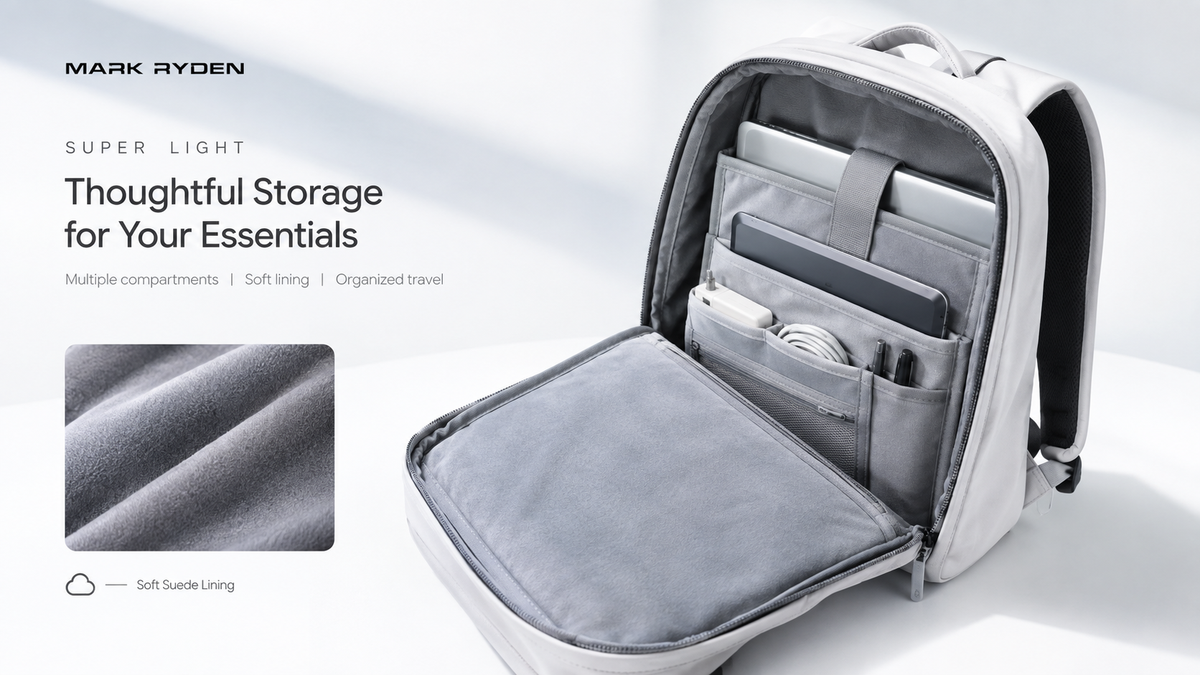
A laptop has become an everyday essential for many people. Whether you are commuting to an office, working from a café, attending university, or moving between different workspaces, carrying a laptop safely and comfortably can make a noticeable difference to your daily routine.
A laptop backpack is more than a regular backpack with a laptop compartment. The right design should provide enough space for your computer and accessories while keeping everything organized and comfortable to carry.
When choosing a laptop backpack, consider more than the size of the laptop compartment. Laptop compatibility, padding, organization, comfort, capacity, durability, and weather resistance can all affect how practical the backpack is for everyday use.
This guide explains what to look for when choosing a laptop backpack for work, commuting, school, and everyday carry.
What Makes a Good Laptop Backpack?
A good laptop backpack should protect your computer while giving you enough room for the other things you carry throughout the day.
Important features to consider include:
-
A dedicated laptop compartment
-
Suitable laptop compatibility
-
Adequate padding
-
Practical organization
-
Comfortable shoulder straps
-
Durable materials
-
Appropriate storage capacity
-
Protection from everyday moisture
-
Easy access to frequently used items
The best combination depends on your routine.
Someone who carries only a laptop and charger may prefer a compact backpack, while someone who commutes with a laptop, lunch, notebook, headphones, water bottle, and personal items may need considerably more space.
What Size Laptop Backpack Do You Need?
Laptop backpacks come in different sizes and capacities, so there is no single size that works for everyone.
Start by considering your laptop and then think about everything else you normally carry.
For a Laptop and Basic Essentials
A smaller backpack may be enough if your daily setup consists mainly of:
-
Laptop
-
Charger
-
Notebook
-
Phone
-
Wallet
-
Headphones
-
Small personal items
A compact design can be easier to carry through busy streets, public transportation, or crowded offices.
For Work and Daily Commuting
If you regularly carry additional items, a backpack around 20–30L can offer more flexibility.
You may need room for:
-
Laptop
-
Tablet
-
Documents
-
Notebook
-
Charger
-
Power bank
-
Headphones
-
Water bottle
-
Lunch
-
Light jacket
This capacity range can provide a useful balance between storage and portability for many commuters.
For Work Plus Travel
If your backpack needs to work for both your daily commute and short business trips, additional capacity may be useful.
A larger backpack can provide space for:
-
Work equipment
-
Clothing
-
Toiletries
-
Travel documents
-
Electronics
-
Other personal belongings
In this situation, features such as expandable storage or multiple compartments can be more useful than simply choosing the largest possible backpack.
How Do You Choose the Right Laptop Compartment?
Laptop compatibility should be one of the first things you check.
A backpack's overall capacity does not necessarily tell you whether your laptop will fit properly.
Before buying, check:
-
Your laptop's dimensions
-
The manufacturer's stated laptop compatibility
-
The dimensions of the laptop compartment
-
The amount of padding
-
How securely the laptop sits inside
Screen size can provide a useful starting point, but laptop dimensions vary between models. If possible, compare your laptop's actual dimensions with the backpack's stated compartment size.
A properly designed compartment should keep the laptop separated from other belongings rather than allowing it to move freely around the main compartment.
How Much Padding Does a Laptop Backpack Need?
Padding can help provide additional protection against everyday bumps and contact with other items.
Look for padding around the laptop compartment and, ideally, a structure that keeps the computer separated from heavier objects.
For example, placing a laptop directly next to a water bottle, charger, or other hard objects can create unnecessary pressure on the computer.
Good organization can therefore contribute to laptop protection as well as convenience.
However, padding alone should not be treated as a guarantee against drops or impacts. How you carry and handle the backpack still matters.
Why Is Backpack Organization Important for Work?
A work backpack often carries more than just a laptop.
You may also need chargers, cables, notebooks, documents, headphones, a mouse, and other small accessories.
Without organization, these items can quickly become mixed together.
Dedicated Compartments
Separate compartments can help keep different categories of belongings organized.
For example:
-
Laptop compartment → computer
-
Main compartment → notebooks and larger items
-
Small zippered pocket → wallet and personal items
-
Accessory pocket → cables and chargers
-
Side pocket → water bottle
The exact layout is less important than whether it matches your routine.
Easy Access
Think about the items you use most often.
If you regularly need your phone, transit card, wallet, or headphones, a quick-access pocket can save time during your commute.
You should not need to remove everything from your backpack just to find one small item.
All backpacks in the MARK RYDEN laptop backpack series feature a dedicated laptop compartment.
What Makes a Laptop Backpack Comfortable?
A laptop can add noticeable weight to a backpack, especially when combined with books, chargers, and other equipment.
Comfort therefore matters if you carry your backpack for extended periods.
Shoulder Straps
Look for adjustable straps that allow you to position the backpack comfortably.
Padding can also help reduce pressure when carrying heavier loads.
Back Panel
A supportive back panel can make the backpack more comfortable during longer commutes.
Breathable materials or ventilation features may also be useful if you walk or cycle to work.
Weight Distribution
How you pack your backpack matters as well.
Heavier items are generally better positioned closer to your back, while lighter belongings can be placed farther away.
This can help the backpack feel more balanced.
Is Water Resistance Important for a Laptop Backpack?
For commuters, protection from everyday moisture can be an important consideration.
Rain, wet surfaces, and accidental splashes can create problems when carrying electronics.
A backpack made with water-resistant material can help reduce exposure to moisture under normal conditions.
However, water-resistant and waterproof are not the same thing.
If a backpack is described as water-resistant, it should not automatically be treated as completely waterproof. In heavy or prolonged rain, additional protection may still be appropriate.
This is particularly important when carrying a laptop or other electronics.
What Materials Are Best for a Laptop Backpack?
Different materials provide different combinations of durability, weight, structure, and weather resistance.
When comparing materials, consider:
-
Durability
-
Weight
-
Water resistance
-
Ease of maintenance
-
Structure
-
Appearance
Oxford fabric, for example, is commonly used in backpacks because it can provide a practical balance between durability and everyday use.
The material itself is only part of the equation, however. Zippers, stitching, seams, handles, and shoulder strap attachment points also contribute to overall durability.
Should a Laptop Backpack Have a USB Charging Port?
Some modern backpacks include USB charging access.
This can be convenient for people who frequently use their phones while commuting or traveling.
However, it is important to understand what the feature actually provides.
A backpack with USB charging access does not generate power by itself. Typically, the backpack provides a convenient connection between an external power bank and your device.
Consider this feature useful if it fits your routine, but do not choose a backpack solely because it includes USB access.
What Other Features Are Useful in a Laptop Backpack?
Additional features can make a backpack more versatile, especially if you use it for more than commuting.
Luggage Strap
A luggage strap can be useful when traveling with a suitcase.
It allows the backpack to be secured to the handle of compatible rolling luggage, making airport transfers and train journeys easier.
Expandable Storage
An expandable backpack can provide additional room when your load changes.
For example, you may carry only your laptop and work essentials on a normal day but need additional space when traveling.
Security Features
Depending on your commute, features such as hidden pockets, secure zippers, or anti-theft designs may be useful.
These features can provide additional convenience in crowded environments, although no backpack feature can completely eliminate the risk of theft.
Laptop Backpack vs. Regular Backpack
A regular backpack can carry a laptop, but it may not provide the same level of organization or dedicated protection.
| Feature | Laptop Backpack | Regular Backpack |
|---|---|---|
| Dedicated laptop compartment | Usually | May not have one |
| Laptop padding | Usually | Varies |
| Accessory organization | Often better | Varies |
| Work-oriented layout | Common | Less consistent |
| Everyday versatility | High | High |
| Travel features | Depends on model | Depends on model |
If you regularly carry a laptop, choosing a backpack designed specifically for electronics can make organization and protection easier.
Should You Use the Same Backpack for Work and Travel?
You can, provided the backpack suits both purposes.
A versatile laptop backpack can be useful if your routine includes commuting during the week and short trips on weekends.
Look for features such as:
-
Laptop protection
-
Flexible storage
-
Multiple compartments
-
Comfortable carrying
-
Expandable capacity
-
Luggage compatibility
The advantage of using one backpack is simplicity. You do not need to move your laptop, chargers, and personal belongings between different bags.
However, if your travel needs are significantly larger than your everyday needs, a dedicated travel backpack may be more practical.
How Should You Pack a Laptop Backpack?
The way you organize your backpack can affect both comfort and convenience.
A simple approach is to place heavier items closer to your back.
For example:
Closest to your back:
-
Laptop
-
Tablet
-
Heavier books
Middle section:
-
Notebook
-
Documents
-
Clothing
Outer compartments:
-
Chargers
-
Cables
-
Wallet
-
Keys
-
Other small accessories
Try to keep liquids in secure containers and separate them from electronics whenever possible.
You should also avoid overfilling the backpack simply because there is available space.
How to Choose a Laptop Backpack for Your Daily Routine
Instead of starting with features, start with your routine.
Ask yourself:
What laptop do I carry?
Check the actual dimensions and compatibility requirements.
How much else do I carry?
Make a list of your everyday essentials.
How long do I carry the backpack?
If you walk or commute for extended periods, comfort should receive more attention.
Do I travel with it?
If you frequently take short trips, consider flexible storage and luggage compatibility.
Do I commute in wet weather?
If so, consider water-resistant materials and additional protection for electronics.
Do I need quick access?
If you frequently use small items such as your phone, wallet, or transit card, look for accessible pockets.
Thinking through these questions can help you avoid paying for features you will rarely use.
A Practical Laptop Backpack Checklist
Before choosing a laptop backpack, check the following:
Laptop
-
Does the laptop fit the dedicated compartment?
-
Is the compartment padded?
-
Is the laptop held securely?
Capacity
-
Is there enough room for your everyday items?
-
Do you need additional space for travel?
Organization
-
Are chargers and small accessories easy to separate?
-
Can you quickly access frequently used items?
Comfort
-
Are the shoulder straps adjustable?
-
Is the back panel comfortable?
-
Can the backpack carry your typical load comfortably?
Durability
-
Is the material suitable for daily use?
-
Are the zippers and stitching designed for regular handling?
Weather
-
Is the material water-resistant?
-
How will you protect electronics during heavy rain?
Additional features
-
Do you actually need USB charging?
-
Would expandable storage be useful?
-
Would a luggage strap help with travel?
This checklist can make it easier to compare different models without getting distracted by features that do not fit your needs.
Final Thoughts
Choosing a laptop backpack is ultimately about finding the right balance between protection, organization, capacity, comfort, and everyday practicality.
Start with your laptop size, then consider everything else you normally carry. If you commute every day, pay particular attention to comfort and organization. If you also travel, flexible storage and luggage-friendly features may become more important.
Weather resistance is another useful consideration, especially when carrying electronics, but remember that water-resistant materials are not necessarily waterproof.
MARK RYDEN offers laptop and everyday backpacks designed around different combinations of work, commuting, travel, and organization needs. When comparing models, focus on the features that genuinely match your routine rather than choosing a backpack simply because it has the longest feature list.
The right laptop backpack should make your daily routine easier—not give you more things to think about.
Frequently Asked Questions
What size laptop backpack should I get?
The right size depends on your laptop and everything else you carry. A backpack around 20–30L can provide a useful balance for many work and commuting setups, while lighter or heavier loads may require a different capacity.
How do I know if my laptop will fit in a backpack?
Check your laptop's actual dimensions and compare them with the manufacturer's stated laptop compartment dimensions or compatibility. Screen size alone does not guarantee that two laptops will have the same physical dimensions.
Is a laptop backpack better than a regular backpack?
If you regularly carry a laptop, a laptop backpack can provide a dedicated padded compartment and better organization for electronics and work accessories. A regular backpack may still work if it provides suitable protection and organization.
Are laptop backpacks waterproof?
Not necessarily. Some backpacks use water-resistant materials, but water-resistant does not mean completely waterproof. Check the manufacturer's specifications and consider additional protection during heavy rain.
Can I use a laptop backpack for travel?
Yes. A laptop backpack can work well for short trips if it provides enough capacity for clothing and travel essentials in addition to your electronics. Features such as expandable storage and a luggage strap can make it more versatile for travel.
Share:
What Size Backpack Do You Really Need? A Guide to Backpack Capacity