


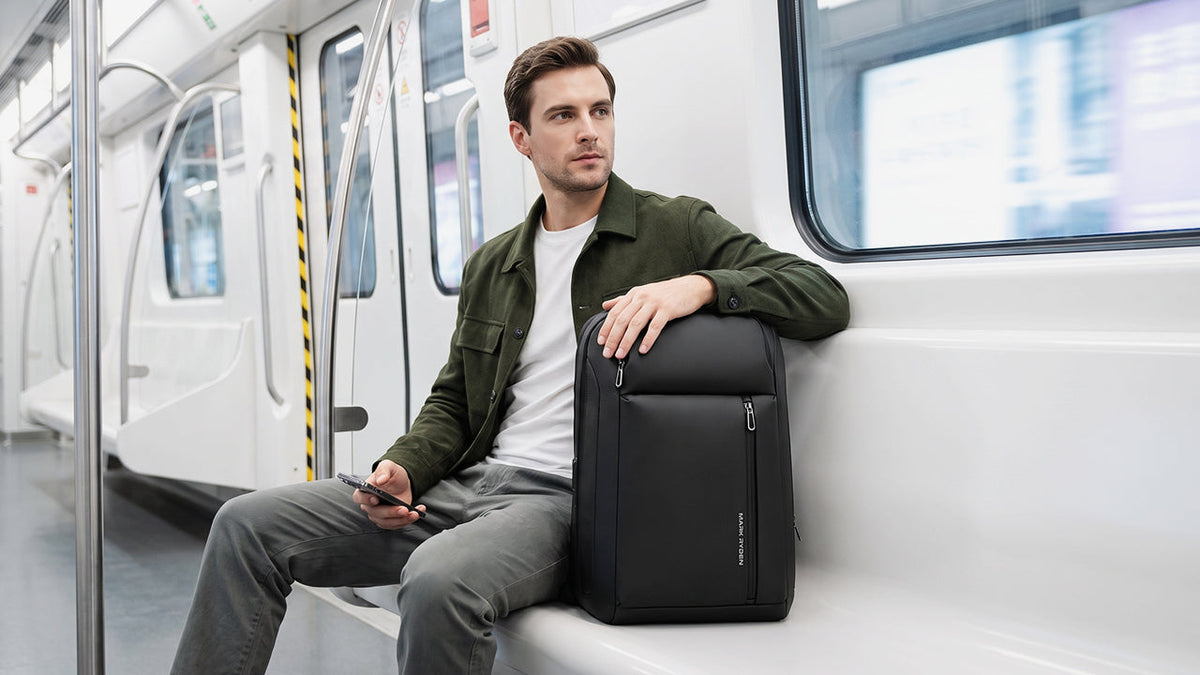
A commuter backpack needs to do more than carry your belongings from one place to another.
For people who travel to work or school every day, a backpack can spend hours on your shoulders, move through crowded trains and buses, sit under a desk, and occasionally deal with rain or unexpected changes to your schedule. Small design choices that seem unimportant at first can therefore make a big difference over time.
The best commuter backpack is not necessarily the largest or the one with the most features. It should fit your daily routine, keep your essentials organized, and remain comfortable throughout your journey.
Whether you walk to work, use public transportation, cycle, or combine several forms of transport, this guide explains the features worth considering when choosing a backpack for your daily commute.
What Should You Look for in a Commuter Backpack?
A good commuter backpack should balance several things at once.
The most important factors are usually:
-
Comfortable carrying
-
Practical capacity
-
Laptop protection
-
Easy organization
-
Quick access to essentials
-
Durable construction
-
Weather resistance
-
A design that works in different environments
You may not need every possible feature. Instead, think about what happens during your typical commute.
If you take a crowded train, easy access and a compact profile may matter more than maximum capacity. If you walk for 30 minutes every morning, comfort and weight distribution become more important. If you cycle, stability and weather resistance may move higher on your list.
Your commute should determine your backpack—not the other way around.
How Much Capacity Does a Commuter Backpack Need?
The right capacity depends on how much you carry every day.
For many commuters, something in the 20–30L range can provide a useful balance between storage and portability.
A typical daily load might include:
-
Laptop
-
Charger
-
Notebook
-
Headphones
-
Water bottle
-
Lunch
-
Wallet and keys
-
Personal items
-
Light jacket
If you carry very little, a smaller backpack may be more comfortable.
On the other hand, if you regularly bring gym clothes, larger electronics, lunch, or other equipment to work, you may need more space.
The important thing is to choose based on your normal load rather than choosing a capacity simply because it sounds impressive.
Why Bigger Is Not Always Better
A large backpack gives you more space, but extra capacity can also encourage overpacking.
A bag that is unnecessarily large may:
-
Feel bulky on crowded transport
-
Be harder to store under a desk
-
Add unnecessary weight
-
Make small items harder to find
For everyday commuting, a well-organized backpack with the right capacity can often be more useful than a much larger bag.
Is a Laptop Compartment Important for Commuting?
For many modern commuters, a laptop is one of the most valuable items in the backpack.
A dedicated laptop compartment can help keep the computer separated from books, chargers, clothing, and other belongings.
When choosing a commuter backpack, check:
-
Laptop compatibility
-
Compartment dimensions
-
Padding
-
Position of the laptop inside the backpack
-
Ease of access
Do not rely only on the advertised screen size. Different laptops with the same screen size can have different physical dimensions, so checking your laptop's measurements against the backpack's specifications is a better approach.
A laptop compartment is particularly useful when your commute involves frequent movement or crowded spaces.

Why Is Organization So Important for Commuters?
A commuter backpack is often opened and closed many times throughout the day.
You might need your phone while waiting for a train, your wallet at a café, your charger at work, or your headphones during the journey home.
If everything is stored in one large compartment, finding small items can become frustrating.
Keep Frequently Used Items Accessible
Consider using:
-
Front quick-access pockets
-
Small zippered compartments
-
Dedicated accessory pockets
-
Side pockets
Items you use frequently should ideally be easy to reach without unpacking the entire bag.
Keep Work Items Separate
A good organization system can also prevent different types of belongings from getting mixed together.
For example:
Laptop compartment
-
Laptop
-
Tablet
Main compartment
-
Notebook
-
Documents
-
Light jacket
Accessory pocket
-
Charger
-
Cables
-
Power bank
Quick-access pocket
-
Wallet
-
Keys
-
Transit card
The exact layout is less important than whether it makes sense for your routine.

What Makes a Commuter Backpack Comfortable?
Comfort is one of the most important considerations if you carry a backpack every day.
Even a relatively light backpack can become uncomfortable when worn for a long period, particularly when it is packed unevenly.
Padded Shoulder Straps
Adjustable, padded shoulder straps can help distribute pressure more comfortably.
Make sure the straps can be adjusted so the backpack sits in a position that feels natural for you.
Supportive Back Panel
The back panel is another important part of the design.
A structured or padded back panel can improve comfort, while breathable materials may be useful if you walk or cycle for longer periods.
Weight Distribution
How you pack the backpack matters as much as the backpack itself.
Heavier items such as laptops and books are generally better positioned closer to your back. Lighter belongings can be placed farther away.
This can help keep the backpack balanced and reduce the feeling of being pulled backward.
How Should a Commuter Backpack Fit?
The backpack should feel stable rather than hanging loosely away from your body.
A few basic adjustments can make a noticeable difference.
Start by adjusting the shoulder straps so the backpack sits comfortably against your back.
Avoid carrying the backpack unnecessarily low if doing so causes the weight to pull backward.
You should also avoid overloading one side of the bag. If possible, distribute heavier items centrally.
The right fit will vary from person to person, so comfort should ultimately be judged based on how the backpack feels during your normal commute.
Is Water Resistance Important for Daily Commuting?
For commuters, weather can be difficult to predict.
A short walk to a bus stop can quickly turn into exposure to rain, and electronics can be particularly vulnerable to moisture.
A backpack made from water-resistant material can provide additional protection during everyday conditions.
However, it is important to understand the difference between water-resistant and waterproof.
Water-resistant materials can help reduce water penetration under normal conditions.
Waterproof products are designed to provide a higher level of protection against water, depending on their construction and specifications.
A water-resistant backpack should therefore not automatically be described as waterproof.
If you regularly commute in wet weather, consider the material as well as the construction of zippers, seams, and openings. You can also use additional protection for particularly sensitive electronics when conditions are severe.
What Backpack Features Are Useful on Public Transportation?
If you commute by train, bus, subway, or other public transportation, certain design choices can become especially useful.
Compact Profile
A backpack that does not extend too far from your body can be easier to manage in crowded spaces.
This can make it easier to move through stations, stand on public transport, and store the backpack when space is limited.
Quick-Access Pockets
A quick-access pocket can be useful when you need your transit card, phone, or wallet without opening the main compartment.
Secure Compartments
Crowded environments require awareness of your belongings.
Secure zippers, concealed pockets, and thoughtful organization can make personal items easier to manage.
These features can help with convenience, but they should not be treated as a guarantee against theft.
Easy-to-Carry Handle
A sturdy top handle can be useful when you need to remove the backpack from your shoulders quickly or carry it by hand for a short distance.
What About Cycling to Work?
A backpack used for cycling may have different requirements from one used mainly on public transportation.
You may want to consider:
-
A stable fit
-
Comfortable shoulder straps
-
Good weight distribution
-
Weather resistance
-
Easy access when stopped
-
A shape that does not interfere with movement
If you cycle regularly, pay particular attention to how the backpack sits when you lean forward.
A backpack that feels comfortable while standing may feel very different when riding.
The same principle applies to walking: test how the bag behaves when you move rather than judging it only when it is sitting on a shelf.
Should a Commuter Backpack Have a Luggage Strap?
A luggage strap is not essential for every commuter, but it can be useful if your daily commute occasionally turns into a business trip or weekend journey.
The strap allows the backpack to sit on the handle of compatible rolling luggage.
This can be particularly convenient when moving through:
-
Airports
-
Train stations
-
Hotels
-
Business districts
If you never travel with rolling luggage, however, this feature may not be important enough to influence your decision.
Do You Need an Expandable Commuter Backpack?
An expandable backpack can be useful when your daily load changes.
For example, you may normally carry only:
-
Laptop
-
Charger
-
Notebook
-
Personal items
But occasionally need extra space for:
-
Clothing
-
Groceries
-
Gym gear
-
Travel essentials
An expandable design can provide additional capacity when needed without requiring you to carry a large backpack every day.
This can be a useful compromise for people whose commute and schedule change throughout the week.
What About USB Charging?
Some commuter backpacks include external USB charging access.
This can be convenient if you regularly use your phone during a commute.
Typically, the backpack itself does not contain a power source. Instead, the USB system provides a connection between a power bank stored inside the backpack and your device.
If you already carry a power bank, this feature can make charging more convenient.
But it should be treated as an optional convenience rather than a reason to choose one backpack over another.
How Durable Should a Commuter Backpack Be?
Unlike a bag used only occasionally, a commuter backpack may be handled every weekday.
It can be placed on floors, under desks, in overhead compartments, and on public transportation.
Pay attention to:
-
Fabric quality
-
Stitching
-
Zipper construction
-
Handle attachment
-
Shoulder strap attachment points
-
Bottom construction
High-stress areas deserve particular attention because they experience repeated pulling and movement.
Durability is not determined by the fabric alone. The construction of the entire backpack contributes to how it performs over time.
How Do You Organize a Backpack for Your Commute?
A simple organization system can make your daily routine easier.
Try dividing your belongings into three groups.
Items You Use Frequently
Keep these near the outside of the backpack:
-
Phone
-
Wallet
-
Keys
-
Transit card
-
Earphones
Items You Need During the Workday
Keep these in the main compartments:
-
Laptop
-
Notebook
-
Documents
-
Charger
-
Water bottle
-
Lunch
Items You Only Need Occasionally
These can go deeper into the backpack:
-
Spare clothing
-
Umbrella
-
Extra cables
-
Personal care items
The goal is to avoid opening the entire backpack whenever you need one small item.
How Heavy Should Your Commuter Backpack Be?
There is no single ideal weight that applies to everyone because the appropriate load depends on the individual and the activity.
However, it is worth paying attention to how much you are carrying.
A backpack that feels comfortable when empty can become very different once you add a laptop, charger, books, lunch, water, and other belongings.
To keep your daily load manageable:
-
Carry only what you need
-
Remove unnecessary items regularly
-
Avoid carrying duplicate chargers or accessories
-
Use digital documents when practical
-
Choose a backpack with enough capacity but avoid excessive empty space
A smaller, well-organized daily load can often be more comfortable than simply moving to a larger backpack.
How to Choose a Commuter Backpack for Your Lifestyle
The best commuter backpack depends on how you actually travel.
If You Use Public Transportation
Prioritize:
-
Compact design
-
Easy access
-
Secure compartments
-
Comfortable carrying
-
Good organization
If You Walk to Work
Prioritize:
-
Comfortable straps
-
Supportive back panel
-
Weight distribution
-
Weather resistance
If You Cycle
Prioritize:
-
Stable fit
-
Comfortable carrying
-
Weather resistance
-
Practical access
-
Appropriate weight distribution
If You Combine Work and Travel
Prioritize:
-
Laptop protection
-
Flexible capacity
-
Organization
-
Luggage compatibility
-
Additional travel features
There is no need to choose the same type of backpack as another commuter. Your transportation method and daily load should guide your decision.
A Practical Commuter Backpack Checklist
Before choosing a backpack for daily commuting, ask:
Capacity
-
Does it fit everything I normally carry?
-
Is it too large for my daily needs?
Laptop
-
Does my laptop fit the dedicated compartment?
-
Is there adequate padding?
Organization
-
Can I separate electronics from other belongings?
-
Are frequently used items easy to reach?
Comfort
-
Are the shoulder straps adjustable?
-
Does the back panel feel comfortable?
-
Does the backpack remain balanced when fully packed?
Weather
-
Is the material water-resistant?
-
How will I protect my electronics in heavy rain?
Daily use
-
Does the backpack work with my transportation method?
-
Can I store it comfortably at work?
-
Will I still find it practical after months of regular use?
Travel
-
Do I need expandable storage?
-
Would a luggage strap be useful?
A simple checklist can help you compare backpacks based on your actual needs rather than getting distracted by features you may never use.
Final Thoughts
A good commuter backpack should quietly make your day easier.
It should carry your laptop and everyday essentials comfortably, keep smaller belongings organized, and fit naturally into the way you travel.
For many commuters, a 20–30L backpack can provide a practical balance between capacity and portability, but your ideal size depends on your daily load. If you use public transportation, compact organization and easy access may matter most. If you walk or cycle, comfort and weather resistance may become more important.
The most useful features are not necessarily the most complicated ones. A well-padded laptop compartment, sensible pockets, comfortable straps, durable construction, and appropriate capacity can make a much bigger difference to everyday use.
MARK RYDEN offers backpacks designed around different combinations of work, commuting, everyday carry, and travel. When comparing options, focus on how the backpack fits your routine rather than simply choosing the one with the longest feature list.
A commuter backpack should work around your day—not make your commute more complicated.
Frequently Asked Questions
What size backpack is best for commuting?
For many commuters, a backpack around 20–30L offers a practical balance between storage and portability. If you carry only a laptop and a few essentials, a smaller backpack may be enough. People who carry clothing, gym equipment, or other bulky items may need more capacity.
What should I carry in a commuter backpack?
Common items include a laptop, charger, notebook, headphones, water bottle, lunch, wallet, keys, and personal belongings. Your daily load will depend on your work and transportation routine.
Is a commuter backpack better than a briefcase?
It depends on your needs. A backpack can distribute weight across both shoulders and provide more flexible storage, which can be useful for longer commutes. A briefcase may be more appropriate in environments where a more formal carrying style is preferred.
Are commuter backpacks waterproof?
Not necessarily. Some commuter backpacks use water-resistant materials, but water-resistant does not mean completely waterproof. Check the manufacturer's specifications and consider additional protection for electronics during heavy rain.
Is 30L too big for a commuter backpack?
Not necessarily. A 30L backpack can be practical if you carry a laptop, work equipment, lunch, clothing, or other daily essentials. If your load is light, however, a smaller backpack may be easier to carry in crowded environments.
What is the most important feature of a commuter backpack?
There is no single feature that is most important for everyone. Capacity, comfort, laptop protection, organization, durability, and weather resistance should be considered together based on your commute and daily load.
Share:
How to Choose the Right Laptop Backpack for Work and Everyday Use