


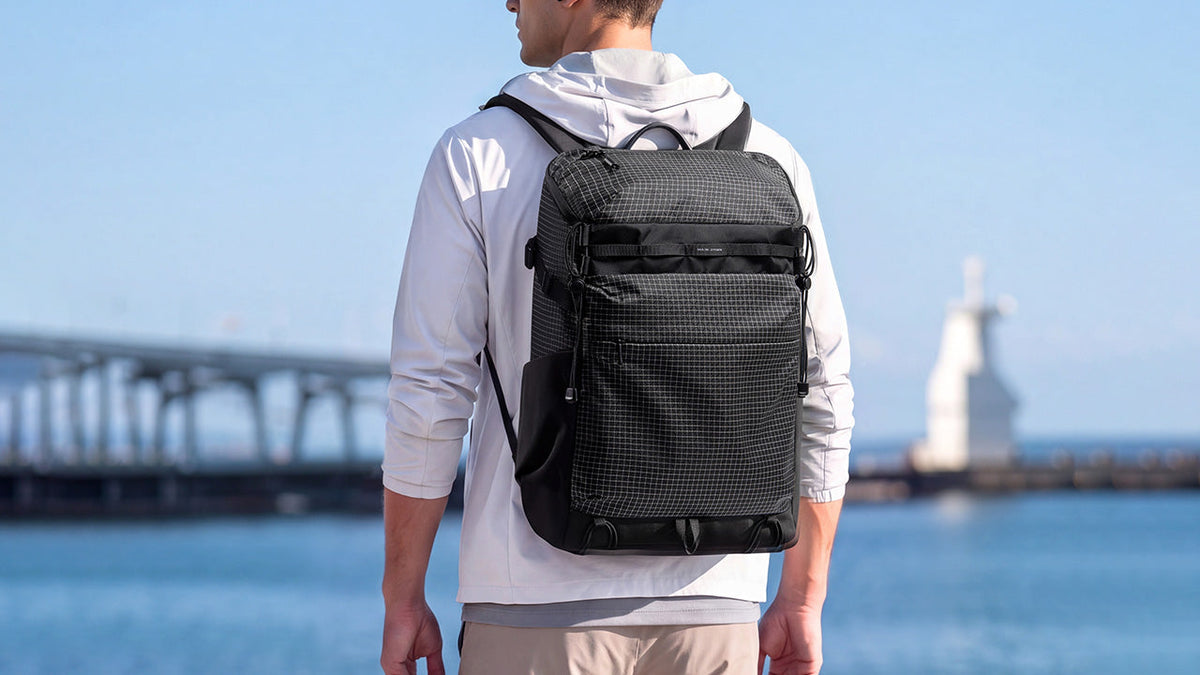
Choosing the right travel backpack can make a trip easier from the moment you leave home. The right bag keeps your essentials organized, protects your electronics, and helps you move comfortably between airports, train stations, hotels, and unfamiliar streets.
But not every travel backpack is designed for the same kind of journey. A compact bag may be ideal for a weekend away, while a longer trip might require more storage, better organization, and room for additional clothing. If you travel with a laptop, you will also need to consider device protection, accessibility, and how the bag fits into your daily routine.
So, how do you choose a travel backpack that suits your needs?
The answer depends on several factors, including trip length, packing habits, carrying comfort, and the way you travel. This guide walks through the key features to consider so you can make a more informed decision.
1. Choose the Right Travel Backpack Size
Capacity is one of the first things to consider when choosing a travel backpack. A bag that is too small can leave you struggling to fit your essentials, while an oversized backpack may be unnecessarily bulky for a short trip.
Travel backpack capacity is usually measured in litres. Although capacity provides a useful starting point, the bag's dimensions, shape, and internal layout also determine how much you can comfortably pack.
What Size Travel Backpack Do You Need?
The following ranges can help you narrow down your options.
| Backpack Capacity | Suitable For | Typical Packing Needs |
|---|---|---|
| 15–20L | Day trips and light travel | Personal essentials, light layers, small electronics |
| 20–30L | Weekend trips and short business travel | Clothing, toiletries, laptop, chargers |
| 30–40L | Longer weekends and multi-day trips | Additional clothing, shoes, electronics and accessories |
| 40L and above | Extended trips and heavier packing | Larger clothing loads and more travel equipment |
These are general guidelines rather than strict rules. A carefully organized 25L backpack may accommodate more useful items than a poorly designed bag with a larger stated capacity.
Your packing style also matters. Someone who travels with a laptop, one change of clothes, and a few essentials will need less space than someone who carries extra shoes, bulky clothing, or camera equipment.
Match Capacity to Your Trip Length
For a one-day trip, a compact backpack may be sufficient. For a weekend away, a 20–30L bag can provide a practical balance between storage and portability.
For longer trips, you may need additional capacity, especially if you prefer to carry everything in one bag. However, more space can encourage overpacking, so it is worth considering what you genuinely need rather than automatically choosing the largest option.
Before deciding, make a list of your usual travel essentials and consider whether they fit comfortably into the bag you are considering.
2. Consider How You Travel
The best travel backpack is not necessarily the one with the most features. It is the one that works with the way you move.
A backpack used mainly for airport transfers has different requirements from one carried through cities all day or taken on outdoor excursions.
Air Travel
If you frequently fly, look for a backpack that is easy to carry through airports and convenient to access during your journey.
Useful features may include:
-
A dedicated laptop compartment
-
A wide-opening main compartment
-
Quick-access pockets for travel essentials
-
A luggage pass-through strap
-
A compact shape that is easy to manage in busy spaces
A luggage pass-through strap allows you to place the backpack over the handle of a rolling suitcase. This can be particularly convenient when moving between airport terminals or train stations.
However, do not assume that every travel backpack qualifies as an airline personal item or carry-on. Airlines have different size and weight restrictions, and these may depend on the route and ticket type.
Always check the current requirements of your airline and compare them with the backpack's external dimensions before travelling.
Road Trips and Train Journeys
For road trips and train travel, easy access and flexible storage can be more important than compact carry-on dimensions.
A wide-opening backpack allows you to see more of the main compartment at once, making it easier to retrieve clothing or accessories without unpacking everything.
Multiple compartments can also help separate clean clothing, electronics, toiletries, and items you need during the journey.
City Travel and Walking
If your trip involves walking through cities, exploring attractions, or using public transportation, comfort becomes especially important.
Look for a backpack that sits securely against your back, has adjustable shoulder straps, and does not feel unnecessarily bulky.
Smaller quick-access pockets can also make it easier to reach your phone, wallet, or other everyday essentials without opening the main compartment.
3. Look for Practical Organization
A travel backpack should make your belongings easier to find, not simply provide more places to store them.
A well-organized design separates items according to how you use them. This is particularly helpful when you move between destinations or need to retrieve something quickly.
Main Compartment
The main compartment should have enough room for clothing, packing cubes, toiletries, and other larger items.
Consider the opening style as well as the overall capacity. A narrow top opening can make it harder to access items at the bottom of the bag, while a wide or clamshell opening can make packing and unpacking more straightforward.
Laptop and Electronics Compartment
If you travel with a laptop or tablet, a separate compartment helps keep your electronics organized and away from other belongings.
Look for padding, a secure closure, and enough room for your device without excessive movement.
It is also worth considering where the compartment is positioned. A dedicated section near the back panel can make electronics easier to separate from clothing and other packed items.
Quick-Access Pockets
Items such as passports, boarding passes, headphones, keys, and phones are often needed throughout a journey.
A dedicated quick-access pocket can help keep these essentials within reach.
For personal security, avoid leaving valuables in exposed pockets when moving through crowded public areas. A well-designed compartment is useful, but your own awareness remains important.
Small Accessory Compartments
Chargers, cables, power banks, pens, and other small accessories can easily become scattered throughout a large bag.
Smaller compartments help keep these items together and reduce the time spent searching for them.
The goal is not to maximize the number of pockets. It is to create a layout that suits your packing habits.
4. Check Laptop Protection and Device Compatibility
For many travellers, a laptop is part of the essential packing list. You might need it for business meetings, remote work, studying, or keeping up with personal tasks while away.
If you carry electronics regularly, laptop protection should be one of your main considerations.
A suitable travel backpack should offer a dedicated compartment with adequate padding and a secure fit. The laptop should not move excessively when you walk, and it should be separated from objects that could scratch or press against it.
Check the Actual Dimensions
Laptop compatibility is often described by screen size, such as 13-inch, 15.6-inch, or 17.3-inch.
However, screen size alone does not guarantee a fit. Different devices can have different external dimensions even when their advertised screen sizes are similar.
Check the manufacturer's compartment measurements and compare them with the dimensions of your laptop.
If you carry a tablet, e-reader, or other electronic device as well, consider whether the backpack has enough separate storage to keep everything organized.
Consider Your Charging Setup
Some travel backpacks include an external USB charging port. This can be convenient when you want to connect a compatible power bank stored inside the bag.
The port itself does not supply power, so you will still need a suitable power bank. Check the connector type and compatibility before purchasing.
USB charging can be a useful extra, but it should not outweigh more fundamental considerations such as comfort, capacity, and device protection.
5. Prioritize Carrying Comfort
A travel backpack may feel comfortable when empty but become very different once packed.
Comfort depends on the design of the bag, how you adjust it, and how much weight you carry.
Shoulder Straps
Look for padded, adjustable shoulder straps that sit comfortably without digging into your shoulders.
The straps should allow you to position the backpack close to your body. If they are too loose, the bag may swing as you walk; if they are too tight, the fit may feel restrictive.
Back Panel
A padded back panel can improve comfort by creating a more supportive surface between your back and the contents of the bag.
Breathable materials may also help when travelling in warmer conditions or walking for extended periods.
Weight Distribution
How you pack affects how the backpack feels.
Place heavier items, such as a laptop or dense electronics, close to your back where possible. Lighter clothing and softer items can fill the outer sections of the main compartment.
This arrangement can help the bag feel more balanced.
Remember that a larger backpack is not automatically more comfortable. Carry only what you need and avoid filling unused space simply because it is available.
6. Choose Materials That Suit Your Destination
Travel exposes a backpack to changing conditions. You may encounter rain, crowded transport, rough surfaces, or frequent loading and unloading.
The material and construction should suit the environments in which you expect to use the bag.
Water-Resistant Materials
Water-resistant materials can help protect your belongings from light rain and everyday moisture.
If you regularly travel in wet conditions, also consider the zippers, seams, openings, and construction of the backpack. These areas can influence how easily water reaches the contents.
Water-resistant does not necessarily mean waterproof. Unless the manufacturer specifies a suitable waterproof rating or test standard, do not assume the backpack can protect your belongings during prolonged exposure to heavy rain.
For valuable electronics, an additional protective sleeve can provide another layer of protection.
Durability and Surface Maintenance
A backpack that travels frequently should be able to handle regular use.
Look for sturdy stitching, reliable zippers, reinforced stress points, and materials that are appropriate for the intended load.
The outer finish also affects maintenance. Some materials are easier to wipe clean, while others may require more careful handling.
Rather than choosing a material based on appearance alone, consider how it will perform during your typical journeys.
7. Consider Security Features
Travel often involves busy environments where your belongings may be close to other people. Airports, train stations, tourist attractions, and crowded streets all require a little extra awareness.
A backpack with thoughtful security features can help you manage your belongings more confidently.
Useful design elements may include:
-
Concealed pockets for personal items
-
Securely positioned compartments
-
Zippers that are less exposed during normal carrying
-
Lockable zipper systems, where available
-
A layout that keeps valuables separate from frequently accessed items
These features can add convenience, but no bag can eliminate the risk of theft. Keep valuable belongings secure, remain aware of your surroundings, and avoid leaving your bag unattended.
If security is a priority, examine how the compartments and closures actually work instead of relying only on labels such as “anti-theft.”
8. Decide Whether Expandable Storage Is Worth It
Expandable travel backpacks offer additional flexibility by allowing the storage space to increase when needed.
For example, you might leave home with a relatively compact load but need more room on the return journey for extra clothing or souvenirs.
An expandable design can help accommodate these changes without requiring you to carry the larger configuration all the time.
However, expansion is not essential for every traveller.
If your packing needs are predictable and you prefer a compact, structured bag, a fixed-capacity design may be sufficient. If your trips vary in length or your packing needs change frequently, expandable storage may be worth considering.
Remember that increasing capacity can also increase the bag's external dimensions. If you plan to fly with it, check the dimensions of the expanded configuration against your airline's requirements.
9. Travel Backpack vs. Suitcase: Which Should You Choose?
A travel backpack and a suitcase serve different purposes, and neither is the ideal option for every journey.
A backpack is often convenient when you need to move frequently, walk through stations, use public transportation, or keep your hands free.
A suitcase may be more practical when you are carrying a larger amount of clothing, travelling with heavier items, or staying in one destination for an extended period.
Consider the following differences.
| Consideration | Travel Backpack | Suitcase |
|---|---|---|
| Mobility | Convenient for walking and stairs | Best suited to surfaces where wheels roll easily |
| Hands-free carrying | Yes | Usually requires a hand to pull or carry |
| Packing structure | Varies by design | Often provides a structured packing space |
| Public transportation | Easy to carry when appropriately sized | Can be cumbersome in crowded spaces |
| Carrying comfort | Depends on fit and total weight | Depends on handling, wheels and load |
| Access to belongings | Depends on opening style | Depends on case design and opening style |
For a short trip with limited belongings, a travel backpack may be all you need. For a longer holiday with several outfits and additional items, a suitcase may provide more convenient storage.
Some travellers prefer to combine both: a suitcase for clothing and a backpack for electronics, documents, and essentials needed during the journey.
10. How to Pack a Travel Backpack Efficiently
Even a well-designed backpack can become difficult to use if it is packed poorly.
A simple packing system helps you make better use of the available space while keeping frequently used items accessible.
Start With a Packing List
Write down what you need for the trip before putting anything into the bag.
Separate your list into categories such as clothing, electronics, toiletries, documents, and personal essentials. This helps reduce unnecessary items and makes it easier to estimate the capacity you need.
Use Packing Cubes
Packing cubes can group clothing into smaller sections, making it easier to find specific items.
They can also help separate clean clothing from worn items during the return journey.
Keep Frequently Used Items Accessible
Passports, headphones, charging cables, and other items you use throughout the day should be easy to reach.
Avoid burying them under clothing or placing them in compartments that require you to unpack the entire bag.
Protect Electronics and Liquids
Keep electronics in their designated compartments or protective sleeves.
Place toiletries and liquids in a separate pouch to reduce the risk of spills affecting clothing or electronic equipment. For air travel, check the applicable rules for carrying liquids in your cabin baggage.
Leave Some Room for Flexibility
Packing a bag to its absolute limit can make it harder to close, carry, and organize.
Leaving a little spare capacity can be useful if your plans change or you need to carry a few additional items during the trip.
11. When Is the Best Time to Buy a Travel Backpack?
Once you know what you need, it becomes easier to compare designs, materials, and prices without being distracted by unnecessary features.
If you are planning upcoming trips, seasonal shopping events can also provide an opportunity to compare available offers.
MARK RYDEN's 2026 BFCM event will run from November 10 to December 10, 2026, covering the Thanksgiving, Black Friday, and Cyber Monday shopping season.
During the event, customers can enjoy 20% off, selected gifts with qualifying purchases or according to the applicable promotion terms, and additional discounts on selected products.
If you are considering a new travel backpack, it may be worth reviewing the available event.
Regardless of when you buy, the most useful starting point is to identify the capacity, organization, and comfort features that suit your journey.
Final Thoughts
Choosing the right travel backpack is about finding a balance between capacity, comfort, organization, and practicality.
Start by considering the length of your trip and the items you normally carry. Then look at the features that will make your journey easier, whether that means a dedicated laptop compartment, a wide-opening main section, water-resistant materials, or a luggage pass-through strap.
Pay attention to the details that affect everyday use rather than choosing a bag simply because it is large or has the longest feature list.
The right travel backpack should help you move between destinations with less effort, keep your belongings organized, and adapt to the way you travel.
When the bag suits your needs, packing becomes simpler—and the journey itself becomes easier to manage.
Share:
MARK RYDEN Anti-Theft Zipper: Secure Backpack Design